Home - Triangular Hole Expanded Mesh - Strong, Aesthetic & Versatile
In the dynamic landscape of industrial materials, the demand for high-performance, versatile, and cost-effective solutions is ever-increasing. Among these, Triangular Hole Expanded Mesh stands out as a critical component across numerous sectors. This advanced material, characterized by its distinctive triangular aperture pattern, offers a unique combination of strength, permeability, and aesthetic appeal. It represents a significant evolution from traditional woven or perforated materials, providing superior structural integrity with optimized material usage.
The industry is currently experiencing a robust trend towards lightweighting and enhanced material efficiency. Manufacturers and engineers are continuously seeking materials that can deliver equivalent or superior performance with less raw material input, thereby reducing costs and environmental impact. Triangular Hole Expanded Mesh perfectly aligns with this trend, offering excellent strength-to-weight ratios. Furthermore, there there's a growing emphasis on materials with extended service life and minimal maintenance requirements, particularly in harsh operating environments.
Emerging applications in sustainable architecture, advanced filtration systems, and high-performance shielding are driving innovation in expanded metal manufacturing. The unique geometry of the triangular holes provides enhanced surface area for filtration, improved airflow for ventilation, and optimized light diffusion for architectural applications. This article delves into the technical specifications, manufacturing processes, application scenarios, and strategic advantages of this indispensable material, providing B2B decision-makers with comprehensive insights.
The production of Triangular Hole Expanded Mesh involves a precise and controlled process that transforms solid metal sheets into a durable, open mesh structure without material loss. This cold-forming process ensures high material integrity and consistency.
This manufacturing process results in a material that is inherently strong, durable, and highly versatile. The cold working during expansion can also slightly increase the material's tensile strength, adding to its robust nature.
Figure 1: Manufacturing process for expanded mesh.
Understanding the technical specifications of Triangular Hole Expanded Mesh is crucial for proper material selection and optimal application. Key parameters define its performance characteristics.
| Parameter | Description | Typical Range / Value |
|---|---|---|
| Material | Common alloys and metals used for fabrication. | Low Carbon Steel, Stainless Steel (304, 316, 316L), Aluminum Alloys, Galvanized Steel, Copper, Titanium |
| SWD (Short Way of Diamond) | Distance from a point on a bond to a point on the opposite bond across the short dimension of the opening. | 6 mm to 75 mm (0.25 in to 3 in) |
| LWM (Long Way of Mesh) | Distance from a point on a bond to a point on the opposite bond across the long dimension of the opening. | 12 mm to 150 mm (0.5 in to 6 in) |
| Strand Width | Width of the material forming the side of the mesh opening. | 0.5 mm to 8 mm (0.02 in to 0.315 in) |
| Thickness | Gauge of the original sheet metal. | 0.5 mm to 6 mm (0.02 in to 0.236 in) |
| Open Area Percentage | The proportion of the total surface area that is open space, influencing permeability. | 20% to 80% |
| Finish | Surface treatments applied for protection or aesthetics. | Mill Finish, Galvanized (Hot-Dip, Electro), PVC Coated, Powder Coated, Anodized |
| Sheet Size | Standard and custom dimensions available. | Up to 2400 mm width, virtually any length in coils or sheets |
The selection of materials significantly impacts the mesh's performance characteristics. For instance, stainless steel variants like SS316 offer superior corrosion resistance in marine or chemical environments, while aluminum provides excellent strength-to-weight ratio for architectural applications. Customization of these parameters allows for tailored solutions to meet specific engineering challenges.
The versatility of Triangular Hole Expanded Mesh makes it an invaluable material across a diverse range of industries, driven by its structural integrity, optimal open area, and aesthetic potential.
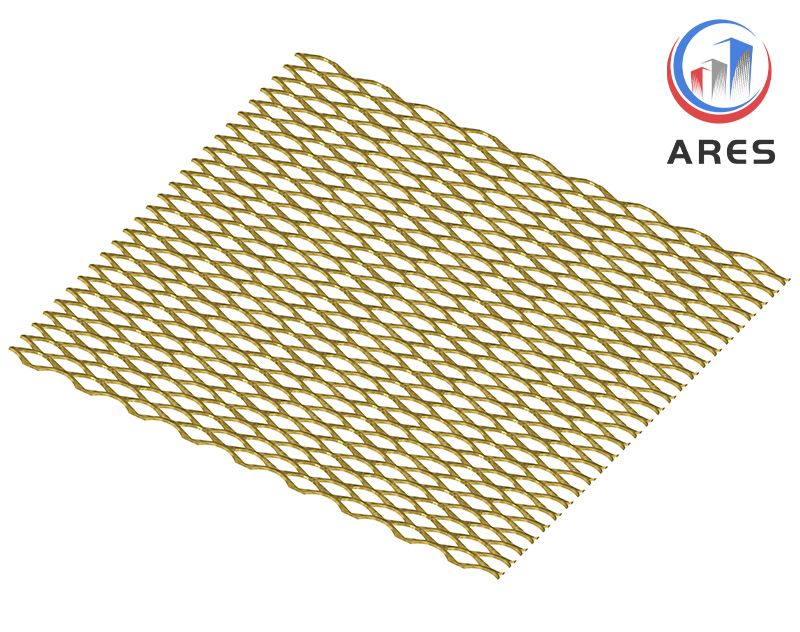
Figure 2: Architectural application of Triangular Hole Expanded Mesh.
The open area of the mesh can be engineered to specific airflow requirements, making it advantageous in ventilation systems where precise air circulation is needed, or in acoustic panels where sound dampening and aesthetic integration are key.
The inherent design and manufacturing process of Triangular Hole Expanded Mesh bestow several distinct technical advantages, making it a preferred choice over traditional materials.
These advantages collectively position Triangular Hole Expanded Mesh as a superior choice for projects demanding a balance of strength, efficiency, and aesthetic versatility.
Selecting the right vendor for Triangular Hole Expanded Mesh is critical to ensure product quality, timely delivery, and competitive pricing. Here's a comparison of key factors to consider:
| Criterion | Leading Manufacturer (e.g., Ares Material) | General Supplier / Distributor |
|---|---|---|
| Product Quality & Consistency | High, rigorous ISO-certified QC, adherence to ASTM F1267, traceable materials. | Variable, depends on their source. May lack direct QC oversight. |
| Customization Capabilities | Extensive, custom materials, patterns, finishes, and dimensions. Direct engineering support. | Limited to standard offerings or what their existing network can provide. |
| Lead Time & Fulfillment | Generally shorter for custom orders due to in-house production. Reliable scheduling. | Can be longer if sourcing from multiple external manufacturers. Less control over delays. |
| Technical Support | Direct access to R&D and engineering teams for application-specific advice and problem-solving. | Often limited to basic product information. May need to defer to manufacturer. |
| Cost-Effectiveness (Overall) | Competitive pricing for direct manufacturing. Value-added services. Lower total cost of ownership. | Potentially lower upfront cost for standard items, but higher risks in quality/customization. |
| Certifications & Compliance | Full compliance with international standards (ISO, ASTM) and readily available documentation. | Varies. May require additional effort to verify certifications of their sourced products. |
For specialized or large-scale projects, partnering with a direct manufacturer offering extensive customization and technical expertise, like Ares Material, often proves more beneficial. Their ability to maintain stringent quality controls and provide dedicated engineering support ensures that the final product meets exact specifications and performs reliably over its intended service life. Our company, Ares Material, has over 15 years of experience in metal fabrication, serving hundreds of B2B clients globally.
Recognizing that every industrial project presents unique challenges, custom-engineered Triangular Hole Expanded Mesh solutions are frequently required. Leading manufacturers offer comprehensive customization capabilities to meet precise project specifications.
For example, a client in the wastewater treatment industry might require a specific grade of stainless steel mesh with a precise open area for bio-filtration, resistant to chlorides, and fabricated into large, curved filter baskets. A custom manufacturer can deliver this with certified material and fabrication processes.
Real-world applications demonstrate the practical advantages and effectiveness of Triangular Hole Expanded Mesh.
Figure 3: Industrial application of Expanded Mesh for safety barriers.
A key aspect of supplier selection in the B2B sector is the assurance of trustworthiness, encompassing clarity on product delivery, quality guarantees, and accessible customer support.
Q: What is the typical lead time for custom Triangular Hole Expanded Mesh orders?
A: Lead times vary based on material availability, complexity of customization, and order volume. For standard materials and designs, typical production lead times range from 2-4 weeks. For highly specialized orders, this may extend to 6-8 weeks. We provide a detailed project schedule upon order confirmation.
Q: What warranty do you offer on Triangular Hole Expanded Mesh products?
A: We offer a comprehensive 1-year warranty against manufacturing defects in materials and workmanship from the date of delivery. This warranty covers the integrity of the mesh structure and adherence to agreed-upon specifications. Specific extended warranties may be available for certain product lines or applications upon request.
Q: How do you ensure product quality and adherence to specifications?
A: Our manufacturing facilities are ISO 9001 certified. We implement a multi-stage quality control process, including raw material inspection, in-process checks at each expansion and finishing stage, and final dimensional and visual inspection. All products are tested against relevant international standards (e.g., ASTM F1267 for expanded metal) and client-specific requirements. Test certificates and material trace reports are provided.
Our commitment extends beyond product delivery. We provide dedicated customer support through experienced technical representatives who can assist with installation guidance, maintenance recommendations, and troubleshooting. For any queries or issues, our team is reachable via phone, email, or our online portal during business hours. We strive for rapid response times to minimize any potential downtime or project delays for our clients.
The deployment of Triangular Hole Expanded Mesh offers a compelling combination of technical prowess, economic efficiency, and design flexibility for a vast array of B2B applications. Its unique manufacturing process yields a material with exceptional strength-to-weight characteristics, superior unitary construction, and optimized permeability, making it an indispensable solution in industries ranging from architectural design and industrial safety to filtration and transportation. By understanding its detailed specifications, benefits, and the value of partnering with experienced manufacturers offering customization and robust support, decision-makers can leverage this material to achieve superior project outcomes and long-term operational excellence.
Leave a message for us